
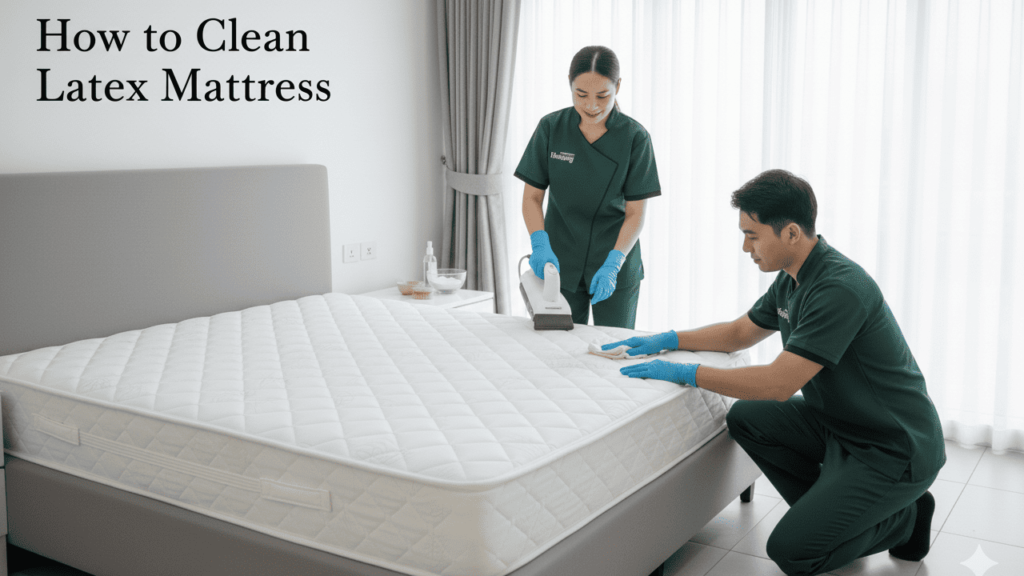
You spend about a third of your life on your mattress, yet it is often the most overlooked item in the house when it comes to cleaning. Over time, your bed becomes a magnet for dead skin cells, sweat, dust mites, and stubborn stains. If you’ve noticed your allergies acting up or a faint, musty odor, it is time to learn how to clean a mattress properly.
The good news? You don’t need expensive industrial equipment to get a “like-new” result. With a few household staples like baking soda and vinegar, you can deep clean your bed and extend its lifespan by years.
In this guide, we’ll walk you through a step-by-step process to sanitize your sleep surface, remove tough stains, and keep your bedroom a healthy sanctuary.
Key Takeaways
- Vacuum First: Always start by vacuuming the surface and seams to remove the “food source” for dust mites.
- The Baking Soda Trick: Sprinkle baking soda for at least 2–8 hours to neutralize odors and pull out moisture.
- Never Soak: Whether you have memory foam or springs, excess liquid is the enemy. It leads to mold and mildew.
- Cold Water Only: When treating biological stains (like blood or sweat), never use hot water, as it “sets” the proteins permanently.
- Protector is Essential: A high-quality waterproof mattress protector is the #1 way to prevent future deep-cleaning headaches.
1. The Step-by-Step Deep Clean
To truly refresh your bed, follow this professional-grade routine every six months.
- Strip and Wash: Remove all bedding and wash it on the hottest setting allowed by the care label to kill bacteria.
- Vacuum Thoroughly: Use the upholstery attachment. Pay extra attention to the quilted seams and crevices where dust and skin cells accumulate.
- Deodorize: Sift a layer of baking soda over the entire mattress. For a spa-like scent, mix in 5 drops of lavender essential oil before sprinkling.
- The Long Wait: Let the baking soda sit for at least 4 hours. The longer it sits, the more oils and odors it absorbs.
- Final Vacuum: Suck up all the powder. You’ll notice the fabric looks brighter and smells significantly fresher.
Read Also: How to Tie a Tie
2. How to Remove Stubborn Mattress Stains
Stains happen, but they don’t have to be permanent. The trick is using an enzyme cleaner or a DIY solution that breaks down organic matter.
For Sweat and Yellow Stains
Mix 1 cup of hydrogen peroxide, 3 tablespoons of baking soda, and a drop of dish soap. Lightly spritz the area (do not soak!) and blot with a clean white cloth.
For Blood Stains
Apply a small amount of 3% hydrogen peroxide or a paste made of salt and cold water. Let it fizz, then blot away with a cold, damp cloth. Remember: Heat will make blood stains permanent.
Mattress Cleaning Solutions Comparison
| Stain Type | Best Cleaning Agent | Technique |
| General Odors | Baking Soda | Sprinkle, wait 4+ hours, vacuum |
| Sweat / Yellowing | Peroxide + Baking Soda | Light mist and blot |
| Urine | White Vinegar + Water (1:1) | Spray, sit for 10 mins, blot, then add baking soda |
| Blood | Cold Water + Salt Paste | Dab gently; never rub |
3. Special Care: Memory Foam vs. Spring Mattresses
Not all beds are created equal. Knowing how to clean a mattress based on its material is crucial to prevent internal damage.
Memory Foam
Memory foam is a giant sponge. If water gets into the core, it may never fully dry, leading to internal mold.
- Spot clean only with the foam of the soap, not the liquid.
- Avoid steam cleaners—the heat can break down the cellular structure of the foam.
Innerspring and Hybrid
These are more resilient but can still rust if the coils get wet. Always ensure the mattress is 100% dry before putting the sheets back on. Use a fan or open windows to speed up the process.
4. When Is It Time to Replace Instead of Clean?
Sometimes, no amount of baking soda can save a mattress. You should consider a replacement if:
- There is visible mold or a deep-seated mildew smell that won’t go away.
- The mattress is over 7–10 years old and has lost its support.
- You wake up with persistent respiratory issues or skin rashes despite regular cleaning.
Conclusion
Mastering how to clean a mattress is one of the best things you can do for your health and your wallet. By vacuuming monthly and deep-cleaning twice a year, you ensure your sleep environment remains hygienic and comfortable.
Would you like me to recommend the top-rated mattress protectors for 2025 to keep your bed clean for the long haul?
Frequently Asked Questions (FAQ)
Q: Can I use a steam cleaner on my mattress?
A: Use caution. While steam kills dust mites, the excess moisture can easily get trapped inside the mattress, leading to mold. If you use steam, ensure you have high-powered fans running and do not put bedding back on for at least 24 hours.
Q: How do I get a “pee” smell out of a mattress?
A: Neutralize the ammonia with a 50/50 mix of white vinegar and water. After blotting, cover the area in a thick layer of baking soda and let it sit overnight to pull the remaining moisture and odor out of the fibers.
Q: Is it okay to flip my mattress to clean the other side?
A: Only if it is a double-sided mattress. Most modern mattresses (especially memory foam and “pillow-top” models) are designed to be one-sided. Check your manufacturer’s tag; if it’s one-sided, simply rotate it 180 degrees instead of flipping.
Q: Does sunlight help clean a mattress?
A: Absolutely! If you can safely move your mattress into direct sunlight, the UV rays act as a natural disinfectant to help kill bacteria and dry out any lingering moisture.