
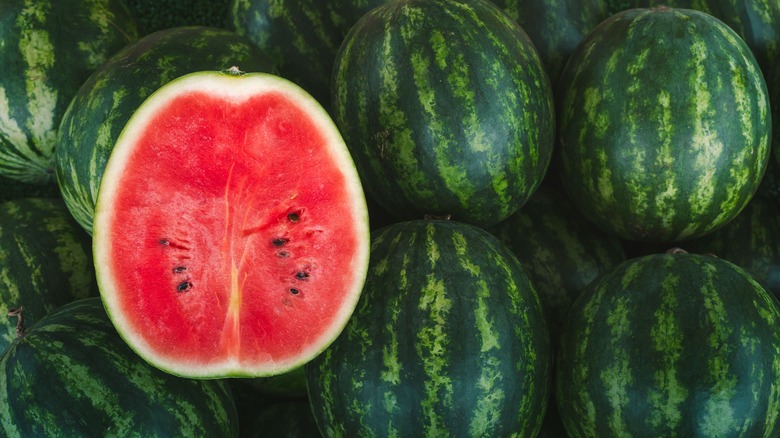
There is nothing more disappointing than hauling a heavy watermelon home, slicing it open, and finding a pale, mealy, or tasteless interior. Because watermelons don’t continue to ripen once they are picked from the vine, the one you choose at the grocery store or farmers’ market is the one you’re stuck with.
Learning how to pick watermelon is an art form that relies on specific visual and auditory cues. You don’t need X-ray vision to find a sweet one; you just need to know which “flaws” are actually signs of high sugar content.
In this guide, we will break down the professional methods for identifying a heavy, juicy, and perfectly ripe melon every single time.
Key Takeaways
- The Field Spot: Look for a creamy yellow patch, not white. This indicates where the melon sat on the ground while ripening.
- Webbing is Good: Large, brown, vein-like “webbing” marks mean bees touched the flower frequently, leading to a sweeter fruit.
- Weight Matters: Always choose the melon that feels heavier than it looks; this means it is full of water and juice.
- The Thump Test: A ripe watermelon should produce a deep, hollow sound rather than a dull thud.
- Dull Over Shiny: A shiny exterior usually means the melon is underripe. Look for a dull, matte finish.
1. Inspect the Field Spot (The Yellow Belly)
The most important step in learning how to pick watermelon is flipping the fruit over. Every watermelon has a spot where it rested on the ground.
- Creamy Yellow: This is the “Goldilocks” zone. It means the melon spent enough time ripening in the sun.
- White or Pale Green: If the spot is white or non-existent, the melon was harvested too early and will likely be tasteless.
- Deep Orange: An orange-yellow spot often indicates an exceptionally sweet, “sugar-ripe” melon.
2. Look for “Sugar Webbing”
Many shoppers avoid watermelons with brown, dry-looking scabs or “veins” on the skin. This is a mistake!
These “bee stings” or webbing marks are caused by bees pollinating the flower. The more webbing you see, the more times the flower was pollinated, which almost always translates to a higher sugar content in the fruit.
Read Also: How to Turn On Noise Cancelling on AirPods
Watermelon Ripeness Checklist
| Feature | What to Look For (Ripe) | What to Avoid (Unripe/Overripe) |
| Field Spot | Creamy, buttery yellow | White, light green, or missing |
| Skin Finish | Dull and matte | Very shiny or waxy |
| Weight | Heavy for its size | Feels light or “hollow” |
| Shape | Uniform (round or oval) | Lumpy, flat sides, or irregular |
| Stem | Dried and brown | Green or moist |
3. The Sound of Success: The Thump Test
The “thump test” is a classic for a reason. Give the watermelon a firm tap with your knuckles and listen closely to the resonance.
- A Deep, Hollow Sound: This indicates the fruit is at peak hydration and the flesh is crisp. Think of a tenor drum.
- A Sharp, High Pitch: This usually means the rind is too thick and the fruit hasn’t matured.
- A Dull, Thudding Sound: This is a red flag for an overripe melon that may have a mealy, mushy texture inside.
4. Size and Weight: Don’t Be Deceived
When you are comparing two watermelons of the same size, always go with the heavier one.
Watermelon is roughly 92% water. A heavy melon is a hydrated melon. If it feels surprisingly light, the water has started to evaporate, leaving the inside dry or pithy. Also, look for a uniform shape. Irregular bumps can indicate that the plant received inconsistent watering during growth.
5. Check the Stem and Tail
If the stem is still attached to the watermelon, use it as a final clue.
- Dried Out: A brown, shriveled stem means the watermelon fell off the vine naturally or was picked at the right time.
- Green and Flexible: A green stem indicates the melon was forced off the vine too early. It hasn’t had the chance to reach its full flavor potential.
Conclusion
Now that you know how to pick watermelon like a pro, you can shop with confidence. Remember to look for that creamy yellow belly, prioritize a dull finish over a shiny one, and never be afraid to give the melon a good thump. With these five steps, every summer BBQ will feature the sweetest fruit on the block.
Would you like me to find some creative recipes for watermelon salad or the best way to store a cut melon to keep it crisp?
Frequently Asked Questions (FAQ)
Q: Should I buy pre-cut watermelon instead?
A: Pre-cut watermelon is convenient, but it loses its crispness much faster than a whole melon. If you do buy pre-cut, look for pieces with a vibrant, deep red color and avoid any containers with excessive “juice” pooling at the bottom, which signals the fruit is breaking down.
Q: Does the “gender” of a watermelon matter?
A: Farmers often refer to “male” (longer/oval) and “female” (rounder) watermelons. While this isn’t scientifically accurate for the fruit itself, rounder melons tend to be sweeter, while longer ones are often more watery and less flavorful.
Q: How long does a whole watermelon stay fresh?
A: A whole, uncut watermelon can stay fresh on your counter for about 7–10 days. If you put it in the refrigerator, it can last up to 2 weeks. However, for the best flavor, try to eat it within a few days of purchase.
Q: Can a watermelon be “too” ripe?
A: Yes. An overripe watermelon will have a mealy texture and a fermented, almost “boozy” smell. If the melon feels soft or has bruises on the outside, it’s likely past its prime.
How to Pick Watermelon: 5 Secrets to Finding the Perfect Ripeness
There is nothing more disappointing than hauling a heavy watermelon home, slicing it open, and finding a pale, mealy, or tasteless interior. Because watermelons don’t continue to ripen once they are picked from the vine, the one you choose at the grocery store or farmers’ market is the one you’re stuck with.
Learning how to pick watermelon is an art form that relies on specific visual and auditory cues. You don’t need X-ray vision to find a sweet one; you just need to know which “flaws” are actually signs of high sugar content.
In this guide, we will break down the professional methods for identifying a heavy, juicy, and perfectly ripe melon every single time.
Key Takeaways
- The Field Spot: Look for a creamy yellow patch, not white. This indicates where the melon sat on the ground while ripening.
- Webbing is Good: Large, brown, vein-like “webbing” marks mean bees touched the flower frequently, leading to a sweeter fruit.
- Weight Matters: Always choose the melon that feels heavier than it looks; this means it is full of water and juice.
- The Thump Test: A ripe watermelon should produce a deep, hollow sound rather than a dull thud.
- Dull Over Shiny: A shiny exterior usually means the melon is underripe. Look for a dull, matte finish.
1. Inspect the Field Spot (The Yellow Belly)
The most important step in learning how to pick watermelon is flipping the fruit over. Every watermelon has a spot where it rested on the ground.
- Creamy Yellow: This is the “Goldilocks” zone. It means the melon spent enough time ripening in the sun.
- White or Pale Green: If the spot is white or non-existent, the melon was harvested too early and will likely be tasteless.
- Deep Orange: An orange-yellow spot often indicates an exceptionally sweet, “sugar-ripe” melon.
2. Look for “Sugar Webbing”
Many shoppers avoid watermelons with brown, dry-looking scabs or “veins” on the skin. This is a mistake!
These “bee stings” or webbing marks are caused by bees pollinating the flower. The more webbing you see, the more times the flower was pollinated, which almost always translates to a higher sugar content in the fruit.
Watermelon Ripeness Checklist
| Feature | What to Look For (Ripe) | What to Avoid (Unripe/Overripe) |
| Field Spot | Creamy, buttery yellow | White, light green, or missing |
| Skin Finish | Dull and matte | Very shiny or waxy |
| Weight | Heavy for its size | Feels light or “hollow” |
| Shape | Uniform (round or oval) | Lumpy, flat sides, or irregular |
| Stem | Dried and brown | Green or moist |
3. The Sound of Success: The Thump Test
The “thump test” is a classic for a reason. Give the watermelon a firm tap with your knuckles and listen closely to the resonance.
- A Deep, Hollow Sound: This indicates the fruit is at peak hydration and the flesh is crisp. Think of a tenor drum.
- A Sharp, High Pitch: This usually means the rind is too thick and the fruit hasn’t matured.
- A Dull, Thudding Sound: This is a red flag for an overripe melon that may have a mealy, mushy texture inside.
4. Size and Weight: Don’t Be Deceived
When you are comparing two watermelons of the same size, always go with the heavier one.
Watermelon is roughly 92% water. A heavy melon is a hydrated melon. If it feels surprisingly light, the water has started to evaporate, leaving the inside dry or pithy. Also, look for a uniform shape. Irregular bumps can indicate that the plant received inconsistent watering during growth.
5. Check the Stem and Tail
If the stem is still attached to the watermelon, use it as a final clue.
- Dried Out: A brown, shriveled stem means the watermelon fell off the vine naturally or was picked at the right time.
- Green and Flexible: A green stem indicates the melon was forced off the vine too early. It hasn’t had the chance to reach its full flavor potential.
Conclusion
Now that you know how to pick watermelon like a pro, you can shop with confidence. Remember to look for that creamy yellow belly, prioritize a dull finish over a shiny one, and never be afraid to give the melon a good thump. With these five steps, every summer BBQ will feature the sweetest fruit on the block.
Would you like me to find some creative recipes for watermelon salad or the best way to store a cut melon to keep it crisp?
Frequently Asked Questions (FAQ)
Q: Should I buy pre-cut watermelon instead?
A: Pre-cut watermelon is convenient, but it loses its crispness much faster than a whole melon. If you do buy pre-cut, look for pieces with a vibrant, deep red color and avoid any containers with excessive “juice” pooling at the bottom, which signals the fruit is breaking down.
Q: Does the “gender” of a watermelon matter?
A: Farmers often refer to “male” (longer/oval) and “female” (rounder) watermelons. While this isn’t scientifically accurate for the fruit itself, rounder melons tend to be sweeter, while longer ones are often more watery and less flavorful.
Q: How long does a whole watermelon stay fresh?
A: A whole, uncut watermelon can stay fresh on your counter for about 7–10 days. If you put it in the refrigerator, it can last up to 2 weeks. However, for the best flavor, try to eat it within a few days of purchase.
Q: Can a watermelon be “too” ripe?
A: Yes. An overripe watermelon will have a mealy texture and a fermented, almost “boozy” smell. If the melon feels soft or has bruises on the outside, it’s likely past its prime.