
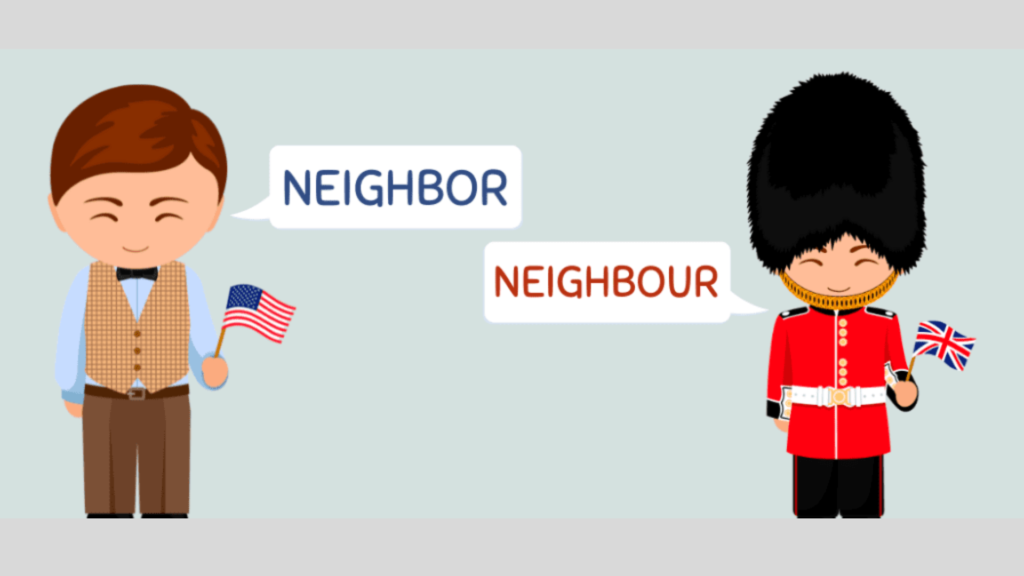
Have you ever sat down to write a friendly note to the person next door, only to freeze at the keyboard? You type “neighbor,” then “neighbour,” and suddenly both look completely wrong. If you’re struggling with how to spell neighbor, you aren’t losing your mind—you’re just caught in the middle of a centuries-old linguistic tug-of-war.
In 2026, with global communication at an all-time high, it’s more important than ever to know which version fits your audience. Whether you are writing a formal letter or a casual text, getting the spelling right ensures your message remains clear and professional.
In this guide, I’ll break down the regional differences, the history behind the split, and a simple trick to never forget the spelling again.
Key Takeaways
- American English: The correct spelling is neighbor (no “u”).
- British/Commonwealth English: The correct spelling is neighbour (includes the “u”).
- Meaning: Both words mean the same thing: someone living near or next to another.
- Consistency is Key: Whichever version you choose, stick with it throughout your entire document.
- The “U” Rule: If you use “color” and “flavor,” use neighbor. If you use “colour” and “flavour,” use neighbour.
1. Neighbor vs. Neighbour: Regional Differences
The primary factor in determining how to spell neighbor is your geographic location. While both versions are technically correct in a global context, using the “wrong” one in a specific country can make your writing seem out of place.
The American Spelling: Neighbor
In the United States, we use the simplified version: neighbor. This change was largely driven by Noah Webster (of Webster’s Dictionary fame), who wanted to make American English more phonetic and distinct from British influence in the early 19th century.
The British & Commonwealth Spelling: Neighbour
If you are in the United Kingdom, Canada, Australia, or New Zealand, you must include the “u.” The spelling neighbour follows the traditional Old French influence on the English language.
Read Also: How to Prevent Alzheimer’s
Spelling Comparison Table
| Language Variety | Correct Spelling | Examples of Related Words |
| American English | Neighbor | Color, Honor, Labor |
| British English | Neighbour | Colour, Honour, Labour |
| Canadian English | Neighbour | Favour, Valour, Harbour |
| Australian English | Neighbour | Humour, Rumour, Vigour |
2. Why is Neighbor So Hard to Spell?
Even after you decide on the “u,” the word itself is a phonetic nightmare. It contains the “eigh” string, which is one of the most confusing clusters in the English language.
- The “EIGH” Sound: Like the words weight, eight, and sleigh, the “eigh” in neighbor makes a long “a” sound.
- The Silent Letters: The “gh” is a remnant of Old English and is now completely silent, leading many people to accidentally type “naber” or “naybor.”
- The Suffix: Remember that it ends in -or (or -our), not -er.
3. How to Remember the Spelling
If you find yourself stuck, use this simple mnemonic device:
“My neighbor is eight doors down.”
Since most people know how to spell the number eight, associating it with neigh-bor helps you remember that tricky “eigh” sequence every single time.
For the British version, remember: “U and I are neighbours.” The inclusion of “U” is a literal reminder to keep that extra letter in the word.
Conclusion
Understanding how to spell neighbor boils down to knowing your location and your audience. If you are in the U.S., keep it short with neighbor. If you are anywhere else in the English-speaking world, keep it traditional with neighbour. As long as you remain consistent within your writing, you’ll be the most articulate person on the block.
Would you like me to check a paragraph of your writing to ensure your spelling is consistent with either American or British standards?
FAQ Section
Q: Is “neighber” ever correct?
A: No. Whether you are using American or British English, the word always ends with an “o” before the “r.” Spelling it with an “e” at the end is a common misspelling.
Q: Does Canada use “neighbor” or “neighbour”?
A: Canada generally follows British spelling conventions for words ending in -our. Therefore, neighbour is the preferred and correct spelling in Canadian English.
Q: Is the plural “neighbors” spelled differently?
A: The rule stays exactly the same. In the U.S., it is neighbors. In the UK and other Commonwealth nations, it is neighbours.
Q: Why did Americans drop the “u”?
A: In the 1800s, lexicographer Noah Webster sought to simplify English spelling for Americans. He removed the “u” from words like neighbour, colour, and honour to reflect a more logical, phonetic approach to the language.